Why Im Doing This Fundraiser
Saturday 8th Aug
Stroke Doesn’t Discriminate: Why Support Shouldn’t Either
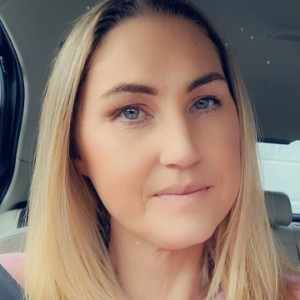
In 2019, at the age of just 36, I experienced something I never imagined would happen to me — I had a mini stroke, or TIA (Transient Ischaemic Attack).
Thankfully, I was extremely lucky. I got to hospital within an hour, received the appropriate medication, and, fortunately, no further complications developed. I did, however, experience some left-sided paralysis, problems with my speech and terrible migraines.
Physically, I recovered.
Mentally, however, it was a very different story.
“Why me?”
One of the hardest things to deal with was not knowing why it had happened.
I had no family history of strokes. I wasn't expecting it. There was no obvious explanation. It was simply described to me as, essentially, “just something that happened.”
But how do you process something so frightening when you don't understand why it happened?
At just 36 years old, I suddenly had to face the reality that my body had done something I never thought possible at my age. It made me question everything. I worried about it happening again. I became more aware of every headache, every strange sensation and every little change in my body.
The physical effects may have improved, but the emotional impact stayed with me.
I knew I needed someone to talk to — someone who understood what it was like to experience a stroke at a young age. So I enquired about counselling and support groups.
Unfortunately, I was told that there wasn't really a support group available for people my age who had experienced a TIA or stroke.
The groups that were available were primarily aimed at people who had suffered more significant strokes, had lasting physical effects, or at their families and carers.
And while those groups are incredibly important and absolutely necessary, I couldn't help but feel that there was something missing.
A stroke can happen at any age
Since my own TIA, I've become increasingly aware of just how many “young” people in my local area and surrounding areas have experienced a stroke or TIA.
It has made me realise that my experience wasn't as unusual as I once thought.
A stroke doesn't only happen to elderly people.
It doesn't discriminate based on age.
And neither should the support available afterwards.
You don't have to be left with a permanent physical disability for a stroke to have a lasting impact on your life.
You can look perfectly healthy on the outside while struggling enormously on the inside.
The fear, anxiety, uncertainty and emotional trauma that can follow a stroke or TIA are very real, regardless of your age or how well you physically recover.
We need support for ALL ages
I would love to see more support groups and counselling services available specifically for younger people who have experienced a stroke or TIA.
A place where you could sit in a room with people who understand.
People who know what it's like to hear the words “you've had a stroke” when you're in your 20s, 30s, 40s or even younger.
A place where you can talk about the fear of it happening again.
The questions you still have.
The anxiety that nobody else seems to understand.
The anger, frustration and “why me?” moments.
And perhaps most importantly, a place where you don't have to explain why you're struggling just because you don't have obvious physical disabilities.
Sometimes, simply knowing that you're not alone can make an enormous difference.
My hope for the future
I'm incredibly grateful that my TIA didn't leave me with permanent physical disabilities. I know how lucky I am.
But being lucky doesn't mean that the experience didn't affect me.
A stroke is a traumatic life event — whether you're 36 or 76, whether you make a full physical recovery or are left with life-changing disabilities.
The emotional impact deserves to be recognised too.
My hope is that, in the future, nobody who experiences a stroke or TIA at a young age will be told that there isn't a support group for them because they're “too young”.
Because strokes don't discriminate.
So why should support?
If you've experienced a stroke or TIA at a young age, please know that you're not alone. Your feelings are valid, your experience matters, and needing support doesn't make you weak.
Sometimes surviving the event is only the beginning of the journey.
Share